Maryland schools serve blue catfish to reduce invasive population
Caroline County Public Schools is using student lunches to help control the spread of the fish, which makes up 70% of biomass in some local waters.
By Mei Wojcik ·
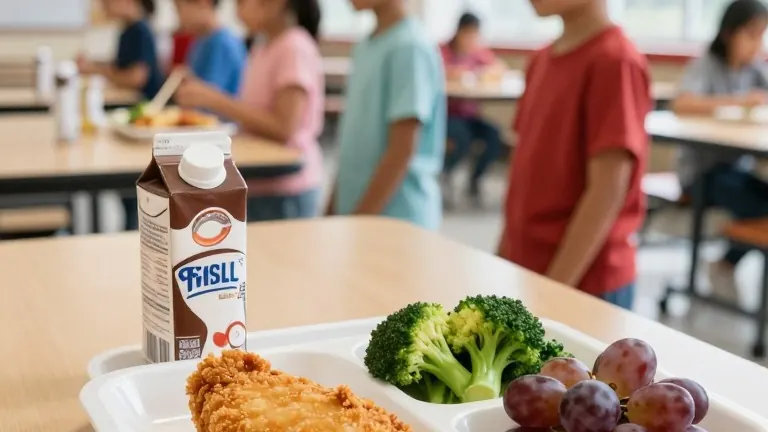
Caroline County Public Schools in Maryland is serving blue catfish to second through fifth graders as part of a strategy to manage the invasive species. The fish appears on the menu a couple of times a month alongside standard cafeteria fare. At Preston Elementary School, students eat the meat in a breaded cake that staff call a catty patty.
Ben Rochon, a second-grader, announced his choice to a reporter. He described the food as yummy. Teagan Donovan, a fifth-grader, prefers the cake without toppings or the bun. She said the fish is good by itself. Not all students choose the fish on days that also offer pizza.
Beth Brewster oversees food services for the district. She stated that the dish tastes great and is healthy for students. The primary goal is to reduce the number of blue catfish in the Chesapeake Bay. The species is an apex predator that can grow to more than 100 pounds. It eats native species like crabs and rockfish.
Karen Fedor, administrator of Farm and Food Programs at the Maryland Department of Agriculture, first approached Brewster about eight years ago. Fedor noted that the fish tastes good and asked Brewster to find a way to use it. Brewster developed the recipe with chefs to meet federal dietary requirements. The team created a crabcake-like dish using the fish. The cakes have USDA approval for service in schools across the United States.
The pandemic slowed the initial rollout. Brewster later connected with Bay2Tray, a California-based program that links seafood to schools. This partnership has expanded the program to other school districts in Maryland and Virginia. Raelynn Truitt, a fifth-grader at Preston, compared the taste to crabs in a fishy way.
Blue catfish are native to the Midwest. They were brought to Virginia rivers in the 1970s for recreational fishing. Officials expected the fish to stay in freshwater areas. Brackish water in the bay was supposed to stop their spread. In 2018, record rainfall in Virginia and Maryland allowed the fish to move into new habitats. Branson Williams, manager of the Invasive Fishes Program for the Maryland Department of Natural Resources, said the fish now occur in every tidal tributary of Maryland and in the Chesapeake Bay proper.
In some areas, blue catfish make up about 70% of the total fish biomass. They reproduce quickly and eat forage fish like menhaden. They also eat young crabs and fish. Virginia officials say the fish are threatening the seafood industry that relies on species like flounder. If blue crab populations drop, it will cause an economic and cultural blow to Maryland.
Maryland is using humans to control the population. This approach is similar to efforts in Kentucky, Illinois, Maine, and Washington state to manage invasive species. Rocky Rice, a fourth-generation Maryland waterman, harvests blue catfish on the lower Potomac River. He started fishing for them 14 years ago as a side activity. Now it is his primary job. He pulls catfish from hoop nets three days a week. He recently hauled in about 1,000 pounds in one trip.
Rice can fish year-round because the fish is invasive. There are no season or size limits. Williams said fishermen do not have to throw small fish back. Rice sells his catch to a processor. Only four processors in Maryland can handle the fish because of a USDA inspection requirement. This rule protects the U.S. market from cheap imports but creates a bottleneck.
Jenn Lovewell, chief nutrition officer for Real Good Fish, said her company shipped a pallet of blue catfish to a university in Texas the day before the report. Both Lovewell and Brewster said millions of pounds of the fish must be harvested to maintain the status quo. Brewster said the fish will never be eradicated. Lovewell urged people to eat the problem to save the bay.
Source: NPR
More Business · Unethical Practices · Report a business · Got a Story?