Saudi, Turkish, and Pakistani Chiefs Land in Tehran to Head Off US-Iran War
Senior security officials from three nations arrived Monday to discuss a regional defense pact and the closure of the Strait of Hormuz.
By Karan Grant ·
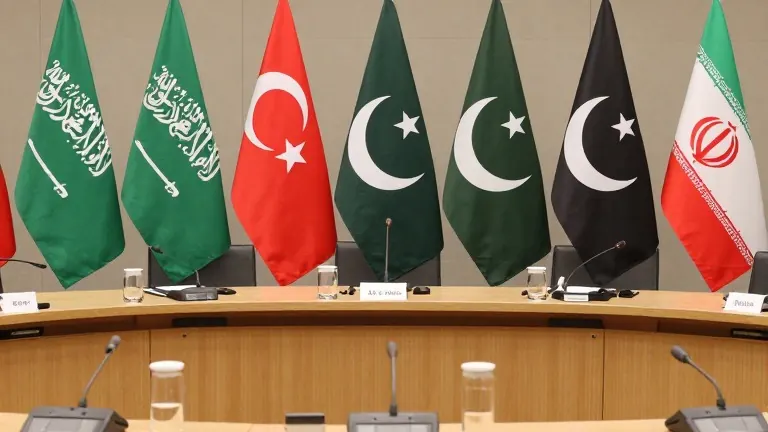
Delegations from Saudi Arabia, Turkey, and Pakistan arrived in Tehran on Monday to negotiate a framework that prevents renewed fighting between Iran and the United States. The visit aims to lower tensions as military rhetoric intensifies on both sides of the conflict.
The diplomatic push follows a defense agreement signed in Mecca in August 2026. While some in Iran viewed that pact as a challenge to Tehran, the signatory nations maintained it is a mutual defense arrangement. This current meeting tests whether that architecture can expand to include Iran directly.
Saudi Defense Minister Khalid bin Salman, Pakistani Field Marshal Asim Munir, and Turkish Intelligence Chief Ibrahim Kalın are meeting with Iranian security officials. Their agenda includes persuading Iran to pressure the Houthis in Yemen to stop missile and drone attacks on Saudi infrastructure. The Houthis recently claimed they closed Riyadh airport and damaged the Saudi economy.
A key point of contention is whether the three nations can balance their push for a long-term security alliance with demands for immediate Iranian compromises. The Iranian Foreign Ministry has long proposed a regional pact where Iran plays a central role instead of the United States. This debate has reopened discussions among Gulf states about whether the heavy presence of US bases provides security or creates vulnerability. Oman has already explored a similar regional pact including Iran.
Esmaeil Baghaei, the Iranian Foreign Ministry spokesperson, stated the meeting could lead to broader cooperation based on shared interests. He noted that the events of the past two years, particularly the last eight months, demonstrated that reliable security requires trust among regional neighbors. Former foreign minister Javad Zarif supported this view, calling for a network based on non-aggression and mutual trust.
Negotiations continue against a backdrop of a major US military buildup ahead of midterm elections. Qatari mediators spent much of Sunday in Tehran seeking terms for Iran to reopen the Strait of Hormuz. Washington has linked the lifting of sanctions to the reopening of the strait, a demand that remains a hurdle for any new agreement. Israeli media reported that Prime Minister Benjamin Netanyahu has been pressing the military to provoke a conflict before Tuesday’s Israeli elections.
The path to a finalized pact remains complex. Iranian hardliners increasingly argue for developing a nuclear weapon, while other Middle Eastern nations resist a deal with Tehran due to recent economic damage. A comprehensive agreement could take months to negotiate, potentially outpacing Washington’s immediate demands for the strait to reopen.
Source: The Guardian