Texas groups cut voter help
A new law punishing paid ballot assistance has forced local nonprofits in the Rio Grande Valley to change how they support voters.
By Mei Wojcik ·
La Unión del Pueblo Entero, a nonprofit in San Juan, turned away a couple seeking help with a mail ballot in October. The organization is one of several in the Rio Grande Valley that has scaled back outreach efforts. They fear legal penalties under a 2021 state law known as SB1. This legislation makes it a felony for anyone to receive compensation for helping a voter fill out a ballot.
Eustorgia Santos de Torres, 67, brought her blind husband, Nemorio, to the group's headquarters. Nemorio, 79, needed assistance with his ballot for the November election. Santos de Torres noted that all ballot information is in English and the print is small. LUPE staff reluctantly refused to help the couple directly. Executive Director Tania Chavez Camacho said the group now must ask paid employees to step away when a voter presents a ballot for help. Workers on the street have been trained to tell voters they cannot assist if asked to mark a form.
The law carries a penalty of up to 10 years in prison and a $10,000 fine. Texas Attorney General Ken Paxton, who is running for U.S. Senate, has prosecuted groups in Latino communities. LUPE serves approximately 30,000 people annually, many of whom are elderly or disabled. The group used to send workers out to walk blocks with voters. Now, they rely on volunteers for limited tasks. Chavez Camacho stated that staff received three years of training to adjust their habits, as they were accustomed to one-on-one support.
The Rio Grande Valley spans Hidalgo, Cameron, Starr, and Willacy counties. It has a population of more than 1.4 million people, with 90% identifying as Hispanic or Latino. About 24% of residents live below the poverty line, and 30% lack health insurance. Nemorio Torres is blind due to diabetes, a condition that is prevalent in the region. Many residents in rural colonias speak primarily Spanish. The area has a long history of labor activism and relies heavily on trade with Mexico.
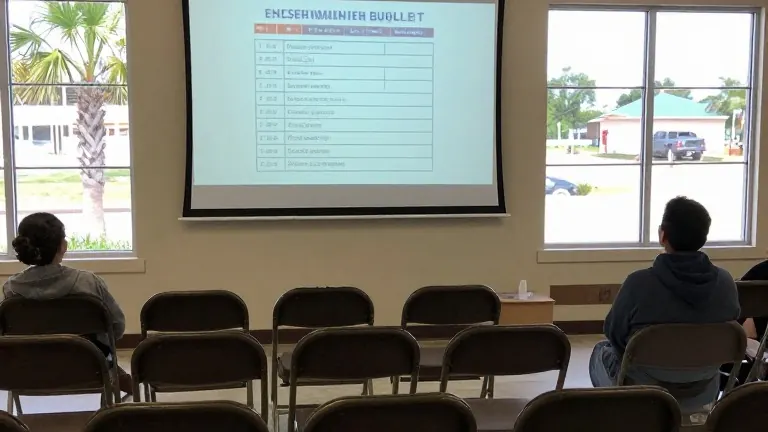
Zachary Dolling, litigation director at the Texas Civil Rights Project, noted that courts interpret compensation broadly. This includes benefits like dinner, t-shirts, or college credit for volunteers. Organizations find it difficult to know if they are violating the law. LUPE has shifted to group sessions with projectors to explain ballots. However, Chavez Camacho said this approach fails for those who cannot read. Volunteers at polling places now must sign oaths confirming the voter is qualified for help and that they are not paid by a candidate.
SB1 was passed in 2021 following contested claims about the 2020 election. Democrats attempted to block the bill with walkouts and a filibuster but failed. A federal appeals court upheld the key provisions. In 2023, Governor Greg Abbott vetoed a bipartisan bill that would have allowed blind or paralyzed voters to use electronic ballots. This would have let them mark choices on a computer, a tool already available to military voters and astronauts.
Source: KSAT-TV