New Analysis Finds Tariffs Could Raise US Factory Costs by Up to 4.5%
A Washington Center for Equitable Growth analysis warns that Trump's import taxes could squeeze manufacturers with thin profit margins, even as the White House says the policies will revive American industry.
By Amy Swan ·
As President Donald Trump prepares to announce more tariff increases, a new analysis suggests the policies could raise costs at American factories by roughly 2% to 4.5%. Domestic manufacturers rely heavily on global supply chains, and the research offers an early look at how the burden may fall on them.
Chris Bangert-Drowns, the researcher at the Washington Center for Equitable Growth who conducted the analysis, said many firms face "a cash squeeze." Because factories often operate on slim profit margins, he said, even seemingly small cost increases "could lead to stagnation of wages, if not layoffs and closures of plants" if they become untenable. The analysis was released Tuesday.
The findings highlight the challenge Trump may face in presenting tariffs as a broad economic and political victory rather than simply proof that his negotiating style pressures other nations. Outside economists say the goal of making Americans wealthier and reviving factory towns is unlikely to be met through tariffs. Trump has announced trade frameworks with the European Union, Japan, the Philippines, Indonesia and Britain that would raise U.S. import taxes, and he plans tariffs of 15% to 50% on goods from dozens of other countries starting Friday.
Markets have reacted with some relief that the rates are lower than Trump threatened in April. Trump says tariff revenue will shrink the budget deficit and create factory jobs, while downplaying the risk of higher prices. "We've wiped out inflation," he said last Friday. Still, an Atlanta Federal Reserve survey in June suggested companies would pass on about half of their tariff costs to consumers, and Labor Department data shows the country lost 14,000 manufacturing jobs after the April tariffs were introduced.
The analysis also points to regional exposure. In Michigan and Wisconsin, more than 1 in 5 jobs are in manufacturing, construction, mining, and oil drilling and maintenance, sectors highly exposed to import taxes. In computer and electronics manufacturing, more than 20% of inputs are imported, which could add to the already large cost of building out artificial intelligence technology in the U.S. White House spokesman Kush Desai said, "The 'Made in USA' label is set to resume its global dominance under President Trump."
The analysis has limits. Tariff rates have kept shifting, and it counts only additional costs without determining how they are split among foreign producers, domestic manufacturers and consumers. The legal basis for the tariffs, which rely on an emergency act, goes before a U.S. appeals court on Thursday. Treasury Secretary Scott Bessent said last week that "everyone is willing to pay a toll," though U.S. manufacturers are also paying part of it.
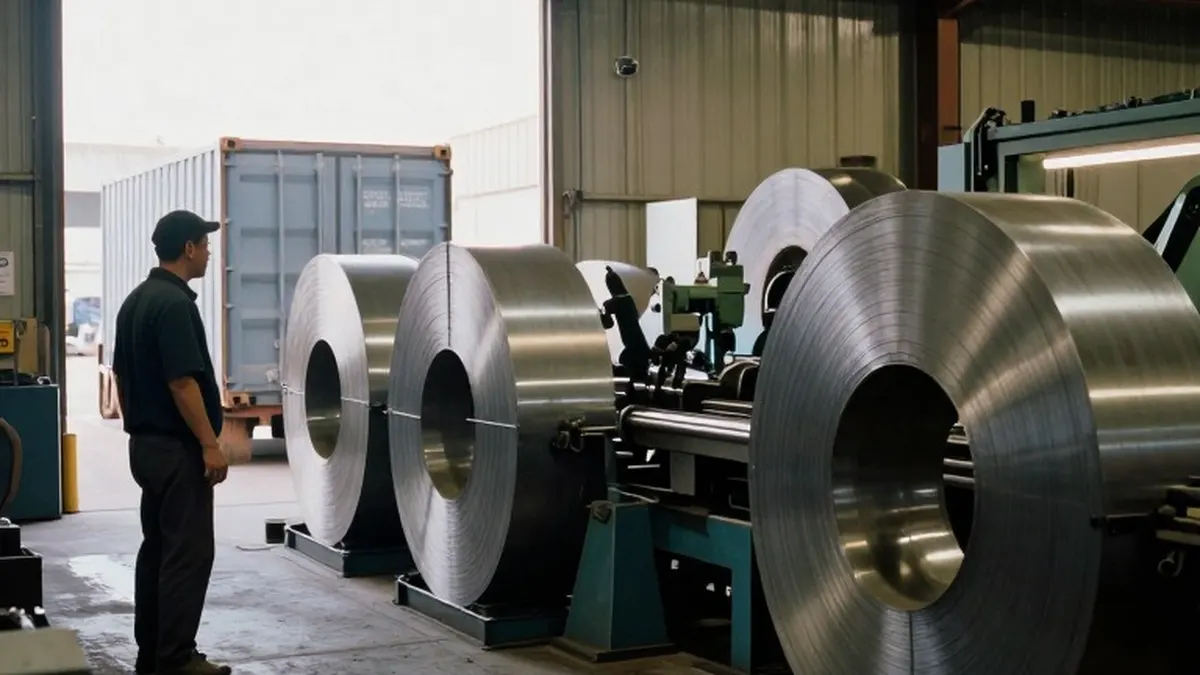
Justin Johnson, president of Jordan Manufacturing Co. in Belding, Michigan, said, "We're getting squeezed from all sides." His company, founded by his grandfather in 1949, has seen steel coil prices rise 5% to 10% this year. It buys only domestic steel, but with foreign competition hobbled by 50% tariffs on imported steel and aluminum, U.S. steelmakers have raised prices. Johnson does not blame them.
The White House says inflation is not appearing, citing a Council of Economic Advisers report that import prices fell between last December and May. Ernie Tedeschi of the Budget Lab at Yale said the CEA's own figures show "import prices have accelerated in recent months." The Budget Lab estimates the tariffs would leave the average household with $2,400 less than it would otherwise have.
Josh Smith, founder and president of Montana Knife Co., calls himself a Trump voter but says the tariffs threaten his business. He recently ordered a $515,000 blade-grinding machine from Germany. With the EU tax set to rise from 10% to 15%, the tariff comes to $77,250, about enough to hire an entry-level worker. Only two companies make such machines, both in Germany. His specialty steel supplier, Crucible Industries of Syracuse, New York, went bankrupt in December and was bought by Sweden's Erasteel, which moved production there. Smith stockpiled a year's supply, but from 2026 the steel faces a 50% duty. "I want to buy more equipment and hire more people," he said.
Originally published by News Media House · Source: Los Angeles Daily News
More Business · Los Angeles news · Unethical Practices · Report a business · Got a Story?