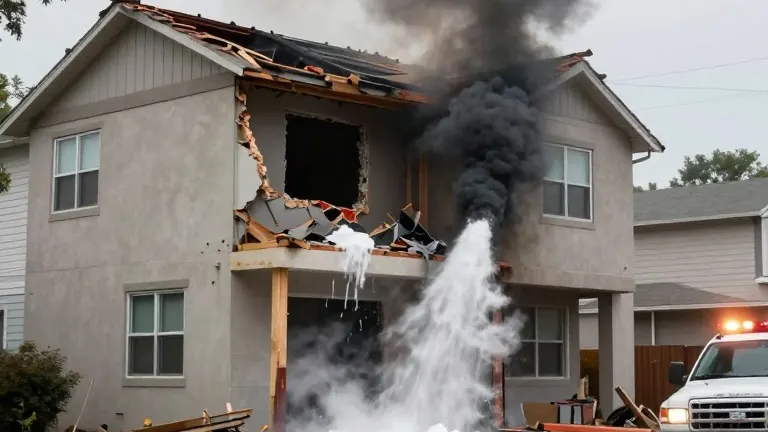
Caltech study finds Eaton Fire smoke exposed 7 million Los Angeles residents to high lead levels
Researchers say urban fire plumes carry distinct toxic chemistry different from typical wildfires, challenging current air quality models.
By Mei Wojcik ·
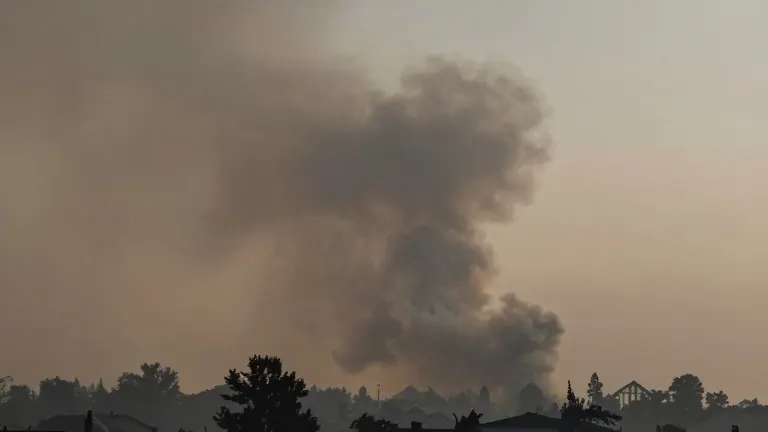
A study from Caltech reveals that approximately 7 million people in the Los Angeles metropolitan area were exposed to lead concentrations 80 times higher than typical values during the peak of the Eaton Fire. The research, published in Science Advances, indicates that the smoke from the fire had a chemical composition distinct from that of standard wildfires due to the burning of structures and vehicles.
The Eaton Fire, which occurred last year, killed 19 people and destroyed nearly 10,000 homes across more than 14,000 acres. Scientists note that when the blaze was concentrated in urban areas, the air contained elevated levels of several toxic elements. Data collected by an air monitoring station in Pico Rivera, located about 11 miles south of Altadena, showed the plume was enriched more than 50 times in lead, seven times in chlorine and bromine, and three times in arsenic.
Haroula Baliaka, the lead author of the study and a PhD student at Caltech, explained that urban fire plumes are chemically distinct from those produced by wildfires. She stated that current models need adjustment to accurately estimate how smoke affects populations miles away from the burn area. Baliaka emphasized that while residents often evacuate for fire, they rarely do so for smoke exposure. She co-authored the report with Caltech graduate student Ryan Ward, and both used four instruments at the Pico Rivera station to continuously measure airborne particle chemistry.
Sally Ng, a Caltech professor of environmental science and engineering and chemical engineering, noted that the type of particle in the air can have different implications for toxicity. The station is part of the National Science Foundation's ASCENT network, which allowed researchers to track how the plume evolved as the fire moved from the city into the San Gabriel Mountains. The study compared the Eaton Fire data with that from the Palisades Fire, which burned nearly 24,000 acres in Orange and Riverside counties. The comparison underscored the chemical differences between urban and wildland fire events.
Richard Flagan, a Caltech professor of chemical engineering and environmental science and engineering, suggested that the response to the Eaton Fire was based on the assumption it was a wildfire event. He argued that it is time to reconsider fire codes for densely populated areas to account for urban firestorms and their downwind health impacts. Flagan noted that excess mortality from air pollution should be considered a primary impact of such events.
Dr. Howard Hu, a Keck professor of preventative medicine at the University of Southern California, said health impacts depend on the dose of lead exposure. He indicated that a single day of exposure is less concerning than chronic exposure over weeks or months. The report notes that high lead levels may be unique to the Eaton Fire because of the age of the homes burned in Altadena. In April 2025, Pasadena city leaders issued a public health advisory after finding lead levels exceeding federal screening guidelines. The Environmental Protection Agency also tested homes in early 2026.
A University of California study released in June found that more than 3 million people downwind of the Palisades and Eaton fires were exposed to chromium-6, a metal associated with respiratory issues and lung cancer. Caltech researchers aim to use their new data to update models that predict air quality and pollutant release from future fires.
Source: KCNC-TV