Injured Wildlife Likely to Turn Up Near Los Angeles Fire Zones; Officials Urge Distance and No Feeding
As residents return to evacuated areas after the Los Angeles-area fires, wildlife rehabilitators say burned and displaced animals may appear, and the public should keep clear and call experts.
By Amy Swan ·
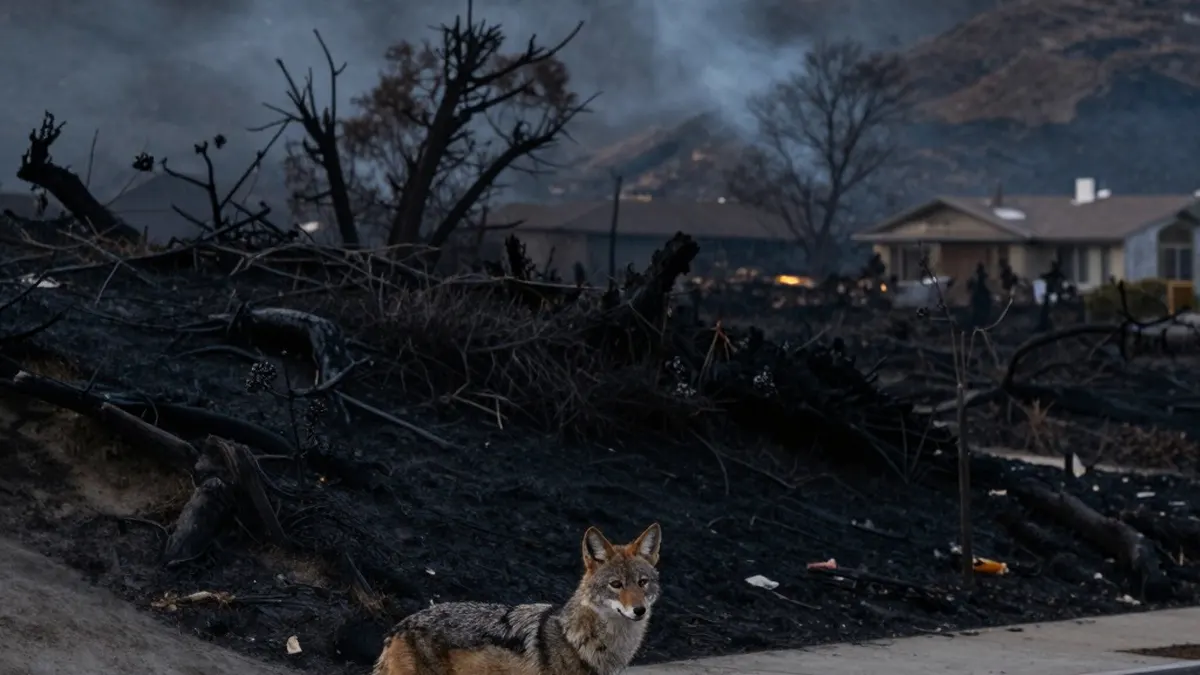
The wildfires that tore through the Los Angeles area have destroyed homes and also swept across thousands of acres of wildland where bears, mountain lions, squirrels and many other animals live. Wildlife rehabilitation centers across Southern California have already begun admitting injured animals, and residents are likely to encounter more as they are permitted to return to evacuated neighborhoods.
Animals driven out of the burn zone, which could include bears, mountain lions, American badgers and ring-tailed cats, may wander into nearby communities. Some may have burned paws or singed feathers, which can make it difficult for them to escape danger or find food and water.
The fires also disrupted the facilities that usually treat hurt wildlife. Some are located in areas that were threatened and had to evacuate. That was the case for the California Wildlife Center in Calabasas, which has since reopened and is again accepting patients.
The animals were already under strain before the fires. Mountain lions in the region face severe inbreeding and a shortage of territory, while bears and coyotes have a tense relationship with people in Los Angeles. Female black bears may also be heavily pregnant or tending newborn cubs, since cubs are typically born in January and February.
Anyone who comes across an injured animal should keep their distance and avoid feeding it. Feeding can encourage an animal to return looking for more food rather than going back to its own habitat. The Wetlands and Wildlife Care Center in Huntington Beach, which has been taking in injured animals from the Palisades and Eaton fires, said: "We want them to keep moving on if they're healthy."
Residents who find injured wildlife are directed to several organizations for advice and help. For the area hit hardest by the Eaton Fire, Pasadena Humane can be reached by text at 626-344-1129. For the Palisades Fire area, the California Wildlife Center can be reached at 310-458-9453 (WILD).
The Wildlife Disaster Network is available at 800-942-6459. Contact details for licensed wild animal rehabilitators are posted on the website of the California Department of Fish and Wildlife, and the department can also be emailed at R5WildlifeReport@wildlife.ca.gov.
LAist's podcast "Imperfect Paradise: Lions, Coyotes, & Bears" offers a closer look at the challenges of sharing urban Southern California with wildlife.
Originally published by News Media House · Source: LAist
More News · Los Angeles news · Report a business · Got a Story?