CPW warns drivers of peak wildlife season as daylight saving ends
Earlier sunsets coincide with animal migration, raising the risk of collisions during morning and evening commutes.
By Karan Grant ·
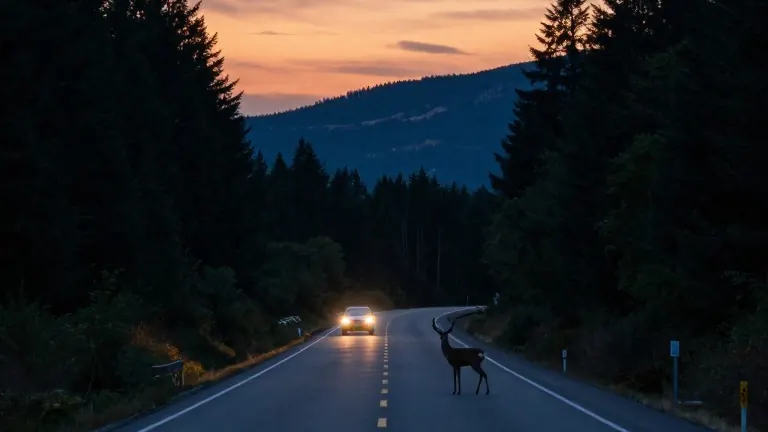
Drivers in Colorado face a higher likelihood of wildlife encounters this weekend as daylight saving time ends. The one-hour clock change brings earlier sunsets, which overlap with the period when animals move to lower elevations for winter. This timing places wildlife directly in the path of peak morning and evening traffic.
Bridget O’Rourke, the statewide public information officer for Colorado Parks and Wildlife, explained that animals travel along roads to find food, water, or shelter. They are fleeing colder temperatures at higher altitudes. O’Rourke noted that these movements happen during the busiest hours on the highways.
Historical data shows that October through December are the most active months for wildlife-related crashes. The Colorado State Patrol responded to 3,811 crashes involving wildlife last year. The agency is currently tracking record-high bear activity across the state this season.
O’Rourke stated that bears are walking along roads during dawn and dusk to fatten up before winter. She predicted that residents will see more bears on roadways this year due to the increased activity.
The agency recommends that drivers slow down in designated wildlife crossing areas. Drivers should scan the road sides for movement and allow animals time to cross. O’Rourke advised that if a driver sees one animal, more may be nearby. She emphasized that safety is the priority for the driver, other motorists, and the animal.
If a collision occurs, drivers should contact the Colorado State Patrol for assistance. O’Rourke also noted that the state builds roads with wildlife migration patterns in mind. Starting in January 2027, vehicle owners will have the option to add a $5 fee to their registration to support wildlife crossing projects.
Source: KMGH-TV