Lula wins fourth term after last-minute voting extension
The 80-year-old incumbent defeated Senator Flavio Bolsonaro by a narrow margin, with the loser vowing to challenge the results in court.
By Riya Ross ·
Brazil’s ruling party leader Luiz Inacio Lula da Silva secured a record fourth presidential term on Sunday, defeating right-wing challenger Flavio Bolsonaro. Lula captured more than 51 percent of the vote compared to 48 percent for his opponent. Electoral authorities declared him the winner after 98.76 percent of ballots were counted. The victory marks a rare political comeback for the 80-year-old, who had lost the first-round vote on October 4 by a margin of 2.2 million votes.
The final outcome remained uncertain until the late hours of the election. Opinion polls had shown the candidates nearly tied in the days leading up to the runoff. Bolsonaro briefly held the lead as early results came in. However, Lula gained ground as returns arrived from the northeast region, a traditional stronghold for the Workers’ Party. Bolsonaro, who had strong support in the south, southeast, and center-west, conceded defeat in his bid to return his family to the presidency.
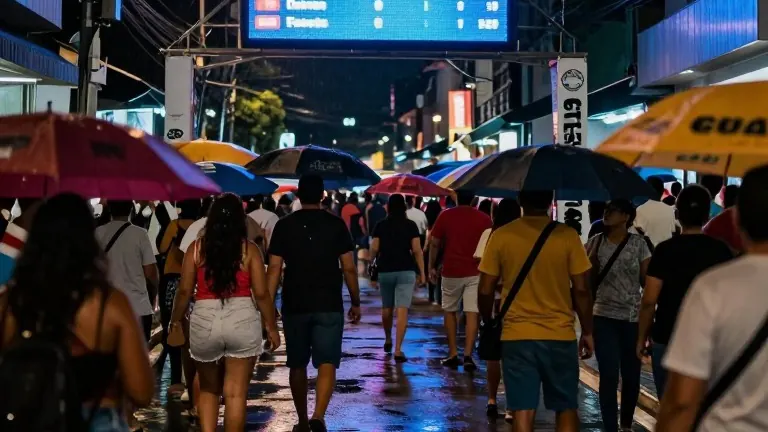
Confusion over voting hours complicated the final phase of the election. Both campaigns petitioned for an extension. Lula’s team argued that reduced public transport services in several cities hindered voter access. Bolsonaro’s camp requested extra time for areas affected by heavy rain and flooding. In Minas Gerais, regional authorities reported that 349 polling locations lost power, though machines ran on backup batteries. Supreme Court Justice Cristiano Zanin ordered stations to remain open until 7 pm Brasilia time, two hours later than the original 5 pm deadline.
The decision created logistical issues because some stations had already closed and shut down their electronic systems. Zanin clarified that only stations still open could continue accepting voters. This led to complaints from citizens who were turned away despite the extension. Bolsonaro cited these disruptions as grounds to annul the vote. He accused Zanin of changing the rules mid-game and engaged in a brief post-election address to his supporters.
Legal challenges appear likely as Bolsonaro’s camp prepares to contest the result. The Federal Police are investigating alleged transport disruptions in five states. In Salvador, a court ordered the arrest of the city’s transport secretary over claims he directed cuts to bus services. Bolsonaro also raised questions about Zanin’s impartiality, noting the justice served as Lula’s personal lawyer before his 2023 appointment to the Supreme Court. Bolsonaro called the election circumstances unacceptable and vowed to pursue court action.
Higher voter turnout may have shifted the balance. Andrei Roman, head of polling firm AtlasIntel, cited a drop in abstention as a key factor. Approximately 33.4 million Brazilians stayed home in the first round, a 21 percent abstention rate not seen in a general election since 1998. Lula’s final campaign focused on cost of living and promised free public transport on weekends to energize his working-class base. The final turnout figures will help explain how he closed the 2.2 million vote gap.
The result complicates the administration of United States President Donald Trump, who has backed the Bolsonaro family. Trump’s State Department recently pushed for sanctions against Brazil to weaken Lula. Trump Jr. criticized the voting extension on social media, suggesting the mainstream media was silent because the outcome served a political cause. Trump himself told reporters on Sunday that the U.S. is watching the situation, though he avoided naming a preferred candidate.
Lula described the election as a defeat for denialism and lies in his victory speech. He highlighted the need to overcome external interference during his campaign. The president praised his supporters as an army of democracy. He expressed doubt that any foreign power possesses an army as victorious as the one in Brazil. The next step involves political negotiation as the new term begins, with tensions between the right wing and the judicial system expected to continue.
Source: Al Jazeera