NASA's Artemis Lunar Plan Faces Cost Reality as Starship Launch Count Hits 22
A new internal assessment suggests the lunar lander program requires significantly more propellant transport flights than previously estimated, raising concerns about budget and timeline pressures.
By Andrew Fletcher ·
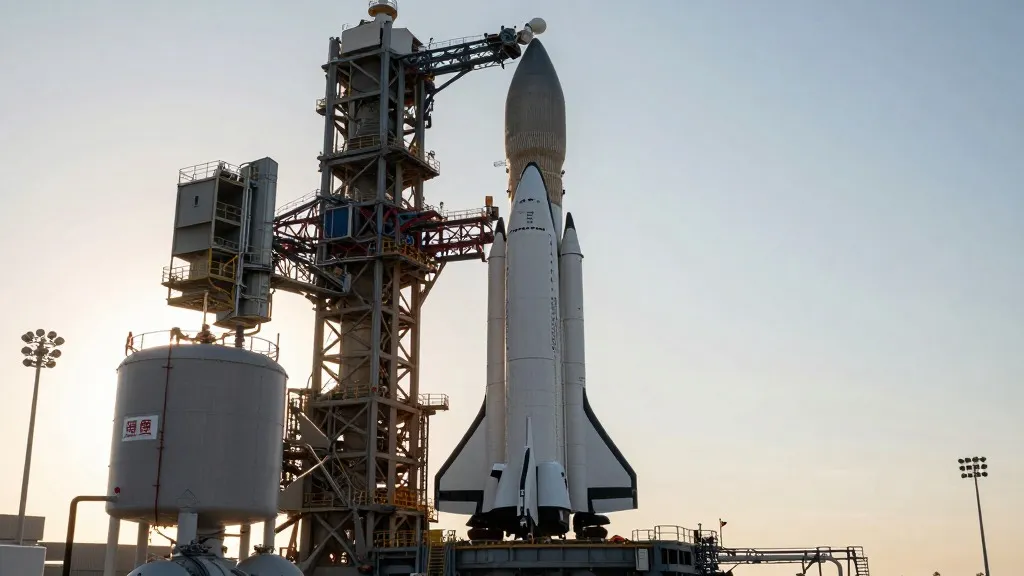
The financial and logistical underpinnings of NASA’s Artemis lunar program are facing a sharper reality check as new data suggests the number of Starship launches required to support a crewed Moon landing has climbed to 22. This figure marks a significant departure from earlier, more optimistic projections and introduces a layer of complexity to the agency’s strategy for returning humans to the lunar surface within the current decade. The tension lies in the gap between the rapid development pace of SpaceX’s hardware and the rigid requirements of NASA’s safety and fueling protocols.
For years, NASA has treated the specific count of Starship flights needed to fuel a lunar lander in low-Earth orbit with a degree of discretion typically reserved for sensitive technical specifications. The agency has historically avoided pinning down an exact number, citing the evolving nature of the technology. In 2023, Lisa Watson-Morgan, then the director of NASA’s Human Landing System, expressed reluctance to provide a precise figure to reporters, stating that while a general idea existed, it was premature to commit to a specific count.
Subsequent comments from officials offered a range rather than a fixed point, suggesting a requirement between the "high single digits" and "low double digits." This earlier estimate implied approximately a dozen launches, a volume that would still have represented a substantial operational burden for SpaceX. Under that scenario, the agency would have required one "depot" Starship to be refueled by 11 "tanker" Starships carrying liquid oxygen and methane propellant. Other officials had even cited figures in the "high teens," reflecting uncertainty about the vehicle's lift capacity and efficiency.
The underlying hope was that SpaceX would dramatically improve the lift capacity of the Starship vehicle, thereby reducing the number of tanker flights needed to fully load the depot. However, internal concerns among some NASA officials suggest that these improvements may not materialize in time for Starship to play a meaningful role in the Artemis timeline. If the vehicle's performance does not scale as anticipated, the logistical burden of propellant transfer could stretch the program's resources and schedule.
The new estimate of 22 launches was highlighted during a quarterly meeting of the NASA Aerospace Safety Advisory Panel held on Thursday. Charlie Precourt, a former NASA astronaut and panel member, discussed the risks associated with the Artemis program and the specific challenges of landing humans on the Moon. His presentation focused on the operational risks inherent in the high-volume launch campaign required to support the lunar lander.
For the business of space exploration, this updated figure represents a critical variable in cost modeling and resource allocation. A higher number of launches implies increased exposure to launch failure rates, greater demand on launch infrastructure, and a larger aggregate cost for propellant and operations. The shift from a "low double digits" expectation to a count exceeding 20 signals that the efficiency gains anticipated from next-generation rocketry may be slower to arrive than the program's timeline demands.
The discrepancy between previous estimates and the new figure underscores the inherent risk in relying on a single vendor for a critical component of a national space program. While SpaceX continues to develop the Starship system, NASA's safety and operational requirements demand a level of redundancy and reliability that may require more flights than the vehicle's current projected capabilities allow. This dynamic places pressure on both parties to align their development roadmaps with the agency's rigid mission deadlines.
As the Artemis program advances, the focus remains on whether the Starship fleet can achieve the necessary launch cadence and reliability to meet the 22-launch requirement. The outcome will likely determine the final cost structure of the lunar landing campaign and the extent to which the program adheres to its original decade-long goal. For now, the number 22 stands as the latest benchmark for what it will take to refuel the path to the Moon.
Source: Ars Technica