Tesla sets late 2027 target for robot deliveries after citing hand and AI challenges
The automator has pushed back the launch of its humanoid robots, acknowledging that competitors like XPeng and Boston Dynamics are making comparable progress on key technical hurdles.
By Anastasia Volkova ·
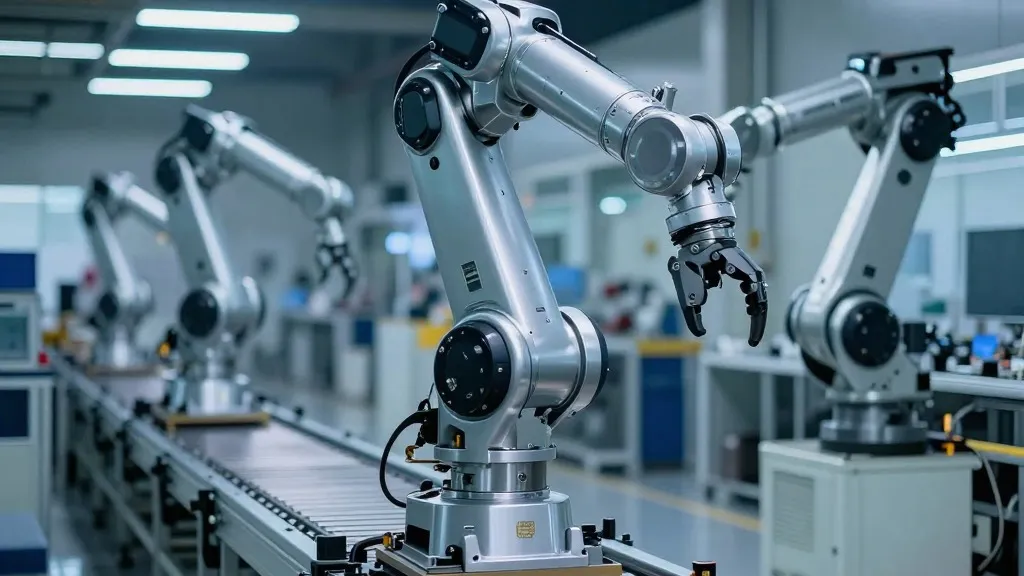
Tesla has officially set a target for the end of 2027 to begin delivering its Optimus humanoid robots to external customers. This timeline was confirmed by CEO Elon Musk during the company’s third-quarter 2026 earnings call, where he outlined the remaining technical obstacles that must be overcome before the robots are ready for the wider market.
The primary hurdle identified by Tesla is the design of the robot’s hands. According to engineers on the call, the fingers require a specific balance of softness to handle delicate items and durability to withstand constant wear, a challenge compounded by the fact that robots cannot heal like human skin. These custom mechanical components, along with specific gears, remain the most difficult hardware areas to finalize, leading to ongoing changes in the production design.
Beyond the physical mechanics, Tesla faces significant challenges with the artificial intelligence architecture. Unlike its fleet of cars, which continuously collects data for its Full Self-Driving software, Tesla lacks a large fleet of robots to generate training data. To address this, the company plans to manufacture between 10,000 and 20,000 units to practice tasks in a dedicated facility known as the Optimus Academy. Additionally, Tesla intends to integrate its AI5 chip into the Optimus platform around April 2027 to enhance processing capabilities.
Production is currently underway at the Fremont factory, where the high-volume line previously used for Model S and Model X vehicles is being repurposed. While the infrastructure for producing a million robots annually is largely installed, Musk indicated it will take at least a year to reach the target rate of 20,000 units per week. The company describes the units currently coming off the line as the first 'production-quality' bots, implying that previous iterations were not yet ready for commercial scale.
The delay to late 2027 marks the latest shift in a timeline that has expanded repeatedly. In 2024, Tesla suggested high-volume external production could begin in 2026, and in early 2025, Musk projected that thousands of robots would be doing useful work by year’s end. Those initial goals have not materialized, with the focus now firmly on ensuring reliability and solving the issue of generalization, which allows robots to perform tasks they were not explicitly pre-programmed for.
This progress exists in a competitive landscape where rivals are advancing on similar technical fronts. XPeng has activated an automated production line for its IRON robot in Guangzhou, with over 80% of core processes automated, and plans to begin deliveries in the first half of 2027. Similarly, Boston Dynamics has started producing its electric Atlas robot and has committed all its 2026 deployments to customers, including Google DeepMind. Both competitors are grappling with the same fundamental issues of hand durability and AI adaptability, though Boston Dynamics has opted for sturdy grippers over human-like dexterity to prioritize industrial utility.
Musk asserted on the call that no other company is close to Tesla in the general-purpose humanoid space. However, the similarity in delivery timelines and technical struggles suggests a tightly contested field. As Tesla prepares to release a video in the coming months demonstrating unscripted robot tasks, the focus remains on whether the company can successfully transition from building high volumes of hardware to creating robots that are genuinely useful in real-world industrial settings.
Source: Electrek