Chinese Markets Shed $2.4 Trillion as AI Valuations Correct
The STAR 50 index has fallen 40% since June, erasing massive wealth as weak consumer demand clashes with heavy state investment in artificial intelligence.
By Riya Ross ·
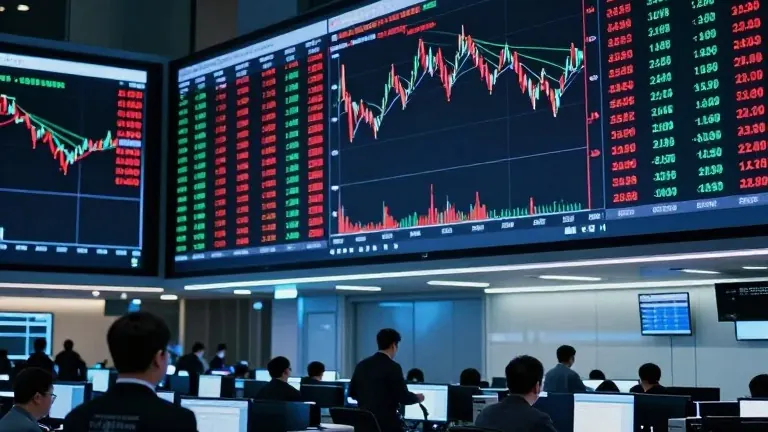
Chinese stock markets have lost $2.4 trillion in value since May, according to data from Bloomberg. The decline reflects a sharp correction in the technology sector, where artificial intelligence stocks represent more than 40% of total market value in China and Hong Kong, per Goldman Sachs. This concentration means that price drops in AI firms create immediate pressure across the broader domestic market.
The selling pressure has been most severe in the STAR 50 Index, which tracks technology and innovation companies on the Shanghai stock exchange. That index has plunged 40% since June. Other indexes tracking major companies in China dropped by approximately 20% over the same period. The decline outpaced the initial government efforts to stabilize the sector.
Beijing has attempted to support the industry through direct capital injection. A state-backed AI investment fund, valued at 60 billion yuan, began allocating money to domestic developers this month. The government has long prioritized AI as a strategic priority, aiming to outpace the United States in technological dominance. However, the market reaction suggests that capital alone has not yet translated into sustained profitability for tech firms.
Consumer behavior remains a central challenge for Chinese tech companies. Dan Wang, the China director for the Eurasia Group, noted that Chinese consumers remain reluctant to spend in the technology sector. "This year, the profit margin is not as good as expected. And the US is raising rates. And China’s domestic demand is so weak," Wang said. She described a general anxiety among technology firms regarding whether state-backed models can succeed without strong organic demand.
External pressures from the United States have compounded the domestic slowdown. Washington has banned humanoid robots from China, citing national security risks. The US is also considering restrictions on Chinese components used in data centers. China relies heavily on exports, and these limits reduce the revenue available for domestic companies. The US ban on humanoid robots specifically targets a sector where Beijing has invested heavily.
Beijing has focused on robotics, or embodied AI, as a key driver for deploying AI across society. The sector is viewed as a solution to demographic issues, including an aging population and a shrinking workforce. Yet, current demand is driven primarily by government agencies and research institutions rather than everyday consumers. Products remain too expensive and impractical for most home settings, limiting the growth of the market.
Unitree, China’s leading robot-maker, illustrates the market’s skepticism. Shares in the company have halved since they began trading in August. Wang stated that it does not look like embodied intelligence will turn into profits in the mass market. She cited thin profit margins, rising US interest rates, and weak domestic demand as the primary factors driving uncertainty.
Policy responses have been constrained by the political calendar. China has restricted overseas investment in recent months, with new regulations taking effect on December 1. These measures have not yet sparked a surge in domestic investment. Top officials in the Chinese Communist Party are gathering this week for the fifth plenum. This meeting will lay the groundwork for the 21st Party Congress next year, where Xi Jinping is expected to be anointed for a fourth term.
Policymakers are avoiding risky stimulus measures during this politically sensitive period. Wang described any new stimulus as high risk, noting that the person responsible for a failed policy would be held accountable. While optimism remains in sectors like AI research and satellites, the immediate outlook for the tech market remains cautious. The next major market event will be the filing by US AI company Anthropic, which is preparing for an IPO that could raise as much as $100 billion.
Source: The Guardian
More Business · Unethical Practices · Report a business · Got a Story?