Kazakh Germans and Researchers Push Back Against Forgotten Gulag Sites
With 223,000 ethnic Germans remaining in Kazakhstan, a new generation is using theater and drone technology to document Soviet labor camps that many locals view as an unwanted past.
By Riya Ross ·
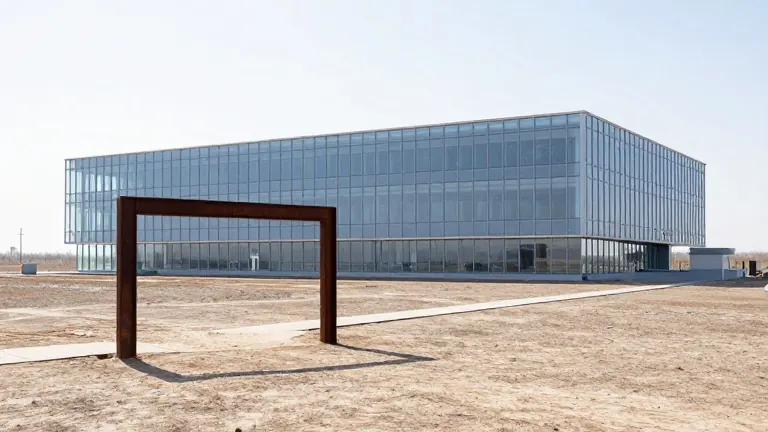
A tension exists in Kazakhstan between a government eager to showcase economic modernity and a minority community determined to preserve the memory of Soviet-era suffering. This conflict is most visible in the country’s capital, Astana, where the House of Friendship serves as a hub for German cultural preservation. The facility, funded primarily by the German government, offers language courses and social services. It also maintains a focus on remembrance, specifically regarding the deportation and repression of ethnic Germans under the Soviet regime.
Yunna Kinereish, a 22-year-old public relations student and member of the Wiedergeburt Association, represents the current generation of Kazakh Germans. Her community numbers 223,000. In 2025, Kinereish produced a documentary about German women held at ALZhIR, a camp for wives of political prisoners. The film details the lives of 167 ethnic German women who passed through the facility. ALZhIR processed 18,000 women in total, many of whom were imprisoned solely because their husbands were labeled enemies of the state.
The physical site of ALZhIR sits just outside Astana. Visitors pass through a large steel structure called the Arch of Grief before entering the museum. The interior displays personal items, models of quarters, and original documents from the Soviet period. The museum aims to keep the history of the 1930s Great Terror accessible to the public. However, attendance remains low, and the site is located in a region that has seen rapid urban expansion.
Further south, near Karaganda, lies the site of Karlag, the largest camp system in the Soviet Union. The complex covered an area 22 times the size of New York City. Between 1931 and 1959, nearly one million people passed through the facility. An estimated 10,000 prisoners died between 1940 and 1950 due to starvation, cold, and forced labor. The museum now occupies the building that formerly housed the camp administration.
Katherine M. Erdman, an anthropologist at Nazarbayev University, has studied the Gulag system for a decade. Her research team uses drones to map the physical remnants of these camps. They have found that forced labor shaped the local landscape, with factories and homes built using bricks made by prisoners. Despite these findings, Erdman reports that local administrators and residents often respond with apathy or rejection. Many prefer to focus on economic advancement rather than the country's brutal history.
The lack of state funding for further academic work highlights the difficulty of sustaining this research. Erdman notes a desire to present a narrative of historical reckoning to the international community, yet domestic interest remains limited. The Karlag museum, in particular, is described by visiting historians as staged, with reconstructed torture cells and dramatic music that may obscure the administrative nature of the original site.
For Kinereish, the work is personal. Her family was driven from the Ukrainian village of Kleinwärter during the Soviet deportations. She participates in theater productions at the House of Friendship to share these stories. She states that her ancestors survived the Gulag system in Kazakhstan and that passing on their experiences is essential to maintaining their roots.
The effort to document these sites continues despite logistical challenges and public indifference. The House of Friendship remains the primary center for this work in Astana, while the physical sites of ALZhIR and Karlag stand as silent markers of the Soviet industrial and penal system on the Kazakh steppe.
Source: Deutsche Welle
More Business · Unethical Practices · Report a business · Got a Story?